Sunday, June 14, 2020

Black Lives Matter

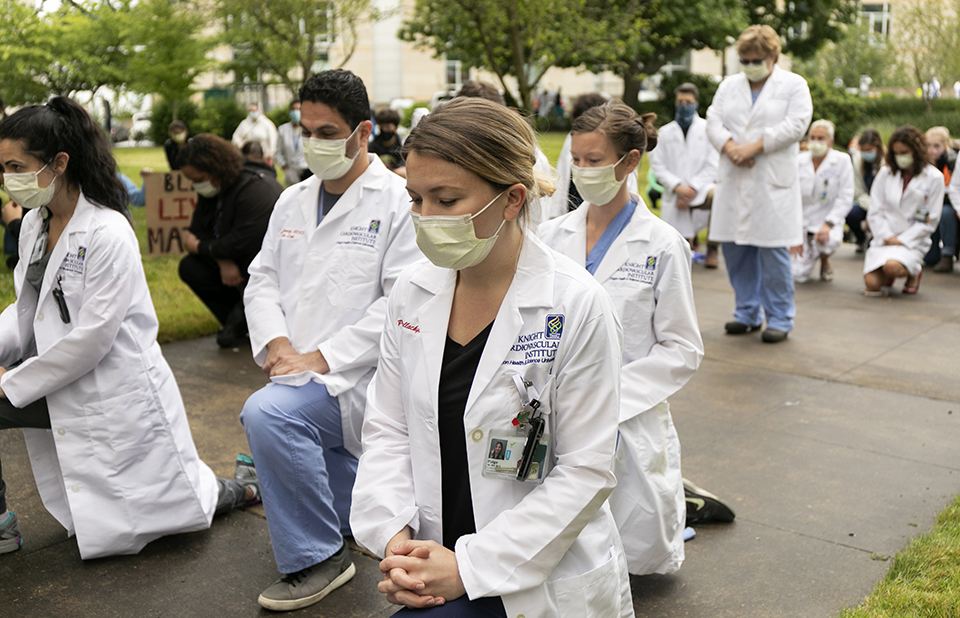
The COVID-19 quarantine has been interrupted by the recent murders of three black citizens at the hands of police. The deaths of Ahmaud Arbery, Breonna Taylor and George Floyd represent a legacy of unjust racism, and have unleashed nationwide protests demanding police reform. Furthermore, emerging coronavirus data suggest a disproportionate burden of illness and death among racial and ethnic minority groups. As a result, the Black Lives Matter movement has become one of the most explosive trials of American racism in modern times. Despite this year's segregation surrounding the coronavirus and pending election, it is empowering to witness society unite to protect human rights.


More than 2,000 turn out for latest Portland anti-racism rally ...

Photographer to donate sales of historic Burnside Bridge protest ...
20/20 means perfect vision; perhaps that is why this year we finally see everything so clearly
It certainly has been an interesting year so far. It still feels like March in many ways, yet we are already halfway through June. The summer solstice is upon us, made apparent in Portland by peak rose season and long daylight hours. I have recently harvested the first berries and greens from my garden. The pharmacy workload at the hospital has been gradually ramping up, but I am looking forward to hitting the trails on my days off as the country cautiously begins to reopen.


What if 2020 isn't cancelled?
What if 2020 is the year we've been waiting for?
A year so uncomfortable, so painful, so scary, so raw--
that it finally forces us to grow.
A year that screams so loud, finally awakening us from our ignorant slumber.
A year we finally accept the need for change.
Declare change. Work for change. Become the change.
A year we finally band together, instead of
pushing each other further apart.

2020 isn't cancelled, but rather
the most important year of them all.
-Leslie Dwight


Saturday, June 6, 2020

Burnt Lake + East Zigzag Mountain

Date hiked: 6/3/20

My first proper hike of 2020 was a home run. Despite staying active through quarantine, I knew that my hiking legs were out of shape. Wednesday's promising forecast was the perfect opportunity to break out my trekking poles and hit the trail.

The North Burnt Lake Trailhead is located in Rhododendron--50 miles (1.5 hours) east of Portland. The trailhead is accessible early in the season, but the bowl surrounding Burnt Lake holds snow until much later, which can complicate route finding. The moderate 9.4-mile out-and-back (2,300' gain) to East Zigzag Mountain is an excellent hike for forest wildflowers in June and July.

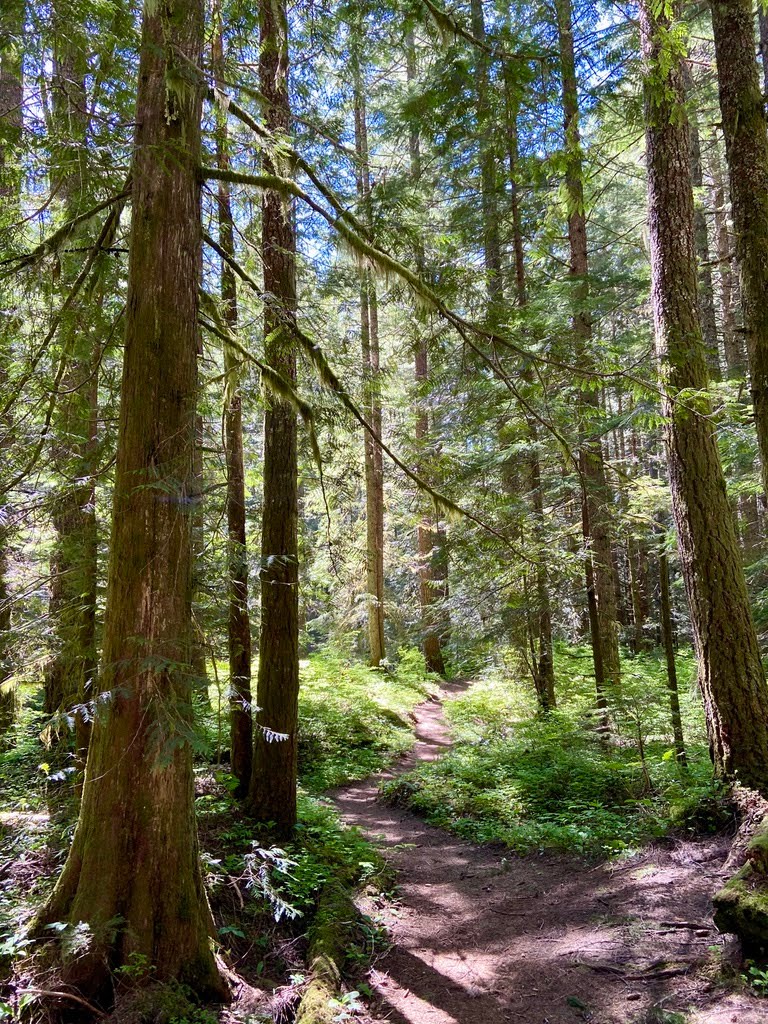
The Burnt Lake Trail begins wide and gentle in a lush forest that was burned over in the late 19th century. Fallen trees and large scorched stumps are all that remain of the old-growth forest.


After crossing several small creeks and waterfalls, the trail becomes a long gradual ascent to Burnt Lake. Named after a 1904 forest fire, Burnt Lake is a picturesque mountain lake on the flanks of Zigzag Ridge, which connects to the southwest side of Mt. Hood. A theoretical route around the lake exists but requires bushwhacking in places.


Continuing on the Burnt Lake Trail, the path drops to cross Burnt Lake Creek before traversing up a couple of switchbacks. About four miles from the trailhead, a junction with the Zigzag Mountain Trail rises steeply to a stellar viewpoint of Burnt Lake and Mt. Hood.


The trail then levels off and opens up to reveal more Cascade volcanoes, including Mts. Adams, Rainier, St. Helens and Jefferson. The rocky summit of East Zigzag Mountain caps out at 4,971'. 11:30am-4pm RT.

Thanks for the recommendation Aunt Judy!

Monday, May 11, 2020

Flattening the Curve

The perception of time has slowed since COVID-19 stay-at-home orders took effect in mid-March. Yet, with the arrival of May, spring blossoms have quickly transformed into summer greens. This means only one thing in Portland--roses! It's difficult to look ahead when the world is frozen in time, but the air is buzzing with anticipation of a long, hot summer.


Oregon managed to flatten the pandemic curve with relative ease; my hospital was over-prepared for the initial wave. Currently, Portland is talking about reopening to its "new normal" as restrictions are cautiously relaxed.

The Portland Police Bureau and Fire & Rescue teamed up to thank and boost morale of front-line healthcare workers at local hospitals
Over the past six weeks, my life has seemingly revolved around the pandemic, both at work and through self-study. This obsession inevitably led to burnout. As a result, I have now returned my focus to self-care. For me, this looks like unrolling my yoga mat every morning, daily walks and bike rides, and countless hours in the garden. Equally important is the sense of community and comic relief that I find through connection with family, friends, therapy, and my partner, Tom.


Saturday, April 25, 2020

An Opportune Reset

Our temperate PNW climate has intensified the green backdrop of Portland during the beautiful month of April. The initial wave of daffodils, hyacinths and cherry blossoms has morphed into tulips, rhododendrons, azaleas and lilacs.


Since isolation began last month, I've used the downtime to reflect on current events. With a constant influx of information, it can be challenging to parse out the truth from the noise. This overwhelming lack of clarity has motivated me to study and share issues that I am passionate about. In this way, I am strengthening my communication skills and confidence in discussing controversial topics.


For example, many of us might agree that the COVID-19 crisis has interrupted our typical daily routines. While you may be eager to resume business as usual after isolation, I encourage you to briefly entertain a different perspective—we don't have to return to normal. Might it be that we were stuck in normal? Every response to this pandemic is an intensification of where society was already headed; social distancing, migration of commerce and education online, restriction of civil liberties. This pause in normalcy is a rare opportunity to create a new world with sustainable systems and elevated consciousness.


Modern ideologies of isolation have conditioned us to value survival and security. This is demonstrated by those currently hoarding groceries or investing greedily. I would argue that this fallacy of separateness has led us astray. It has repressed a natural altruism that defines a full and meaningful life as one of connection and service. Over the past several weeks, I have witnessed many random acts of kindness within the community. When the confining routines of normality waiver, human solidarity breaks through the cracks in the system.


With our economic, political and healthcare systems in free fall, let us reimagine a better world for all. How might we diffuse the concentration of wealth and power? Could we adopt a functional medicine approach to prevent disease rather than treat symptoms? Could we work together to reverse climate change in order to ensure a bright future for generations to come? Might we replace animal exploitation with respect for all living beings? How might we redirect our time and money to give, help and serve others? COVID-19 has shown that rapid change is possible when humanity is united in common cause.


Without minimizing the hardships that accompany COVID-19, I invite you to recognize this golden moment as extraordinary. We are at a crossroads with the potential to reclaim our sovereignty and leverage our future rather than adapt to one that seems inevitable; a choice is available. With humility and gratitude, let us construct a balanced, heart-based, sustainable new world.


"COVID-19 is like a rehab intervention that breaks the addictive hold of normality. To interrupt a habit is to make it visible; it is to turn it from a compulsion to a choice. When the crisis subsides, we might have occasion to ask whether we want to return to normal, or whether there might be something we’ve seen during this break in the routines that we want to bring into the future."
—The Coronation by Charles Einstein

Sunday, April 5, 2020

The History of Human Disease

I am beginning to swallow the hard truth that life will not return to "normal" once this virus presumably peaks and the quarantine lifts. COVID-19, the disease caused by the new coronavirus, is not the first nor will it be the last threat to humanity. It is a symptom of biological collapse on the planet; a warning sign that we are misaligned with nature. With this in mind, I sought to understand how humans played a role in causing this pandemic. Where exactly did we go wrong? To answer this question, I studied the history of human disease and pandemics from Dr. Neal Barnard and Dr. Michael Greger. I reasoned that if we could learn from the past and identify the root cause of the problem, perhaps we could understand how to prevent these situations from happening again. Here's what I found...

The history of human disease can be grouped into three major periods:
  1. 10,000 years ago: infectious disease began with the domestication of animals
  2. 18th—19th century: Industrial Revolution gave rise to chronic disease
  3. 1975—present: emerging plagues develop as we change the way animals live
According to the United Nations, the two greatest threats to our species are climate change and infectious disease (i.e., pandemic influenza). Historically, most viruses have come from animals. For example, the influenza pandemic of 1918—one of the worst plagues in human history—was triggered by the domestication of birds when influenza A (H1N1) passed from a wild duck into a flock of domesticated birds, and subsequently to humans.


Infectious disease seemed to be eradicated by the mid-20th century with the development of antibiotics and vaccines. However, mortality started to creep back up in 1975 as farming practices changed. An increasing demand for animal protein led to exotic animal markets and intensified land use and agriculture (i.e., factory farming). The grotesque and stressful conditions in which animals are raised and slaughtered today are breeding grounds for disease. 80% of antibiotics sold in the U.S. are given to farm animals to maximize animal growth by controlling bacterial populations. As a result, bacteria are becoming resistant to these drugs, rendering them infective on humans—a major public health concern. The agriculture and pharmaceutical industries have monetary interests in keeping this practice alive. Biosecurity practices are also declining in order to cut industry costs.


In order to reduce the risk of future influenza pandemics, the UN recommends decreasing the consumption of chickens and factory farms by replacing large industrial units with smaller scale versions. This shift in animal farming practices would likely prevent other viruses as well, such as the coronavirus. Researchers believe that COVID-19 began in China's live animal markets—the same origin of the SARS coronavirus outbreak in 2003. These markets may soon reopen due to economic pressure, thereby facilitating future viral outbreaks.


I made a decision to stop eating animals three years ago after embarking on a lifelong self-study of nutritional and environmental science. I was overwhelmed by the scientific evidence supporting the idea that a plant-based diet could not only fuel the human body, but also nourish the planet. A vegan lifestyle conveniently checks all of the boxes, which has become one of my core beliefs. Although everyone should be free to make their own choices, with the survival of our species at stake, I feel empowered to inspire change.

The impact of global quarantine has reassured me of two things: that people can change and that the planet can recover. In fact, Dr. Sailesh Rao has recently shown that we could sequester more carbon on the land that is freed up from animal agriculture than all of the carbon added to the atmosphere from fossil fuel burning and land use changes since 1750. In this way, he is optimistic that we can reverse climate change. Isn't it curious that a vegan world could significantly reduce, if not eliminate, the two greatest threats to humanity?

Without judgement, it is time to accept that how we treat animals is creating public health implications. International cooperation is needed to dispel live animal markets and factory farms. Leah Garcés with Mercy For Animals is advocating to create a compassionate food system by collaborating with the farmers. Nobody on the planet is unaffected by this health crisis; let us collectively foster change to alter the course of history. Money may run the world, but there will not be a world for humans if we do not change.


"The idea that some lives matter less
is the root of all that is wrong with the world."
—Paul Farmer